Modern cities are often designed through adult-centered processes, with limited input from the people who use public space differently or depend on it most. Children are frequently discussed in planning conversations, but their ideas and experiences are rarely solicited in meaningful ways. Teenagers, in particular, are often accommodated only through a narrow set of designated spaces, while everyday environments are shaped without considering how young people move through, gather in, or experience them.
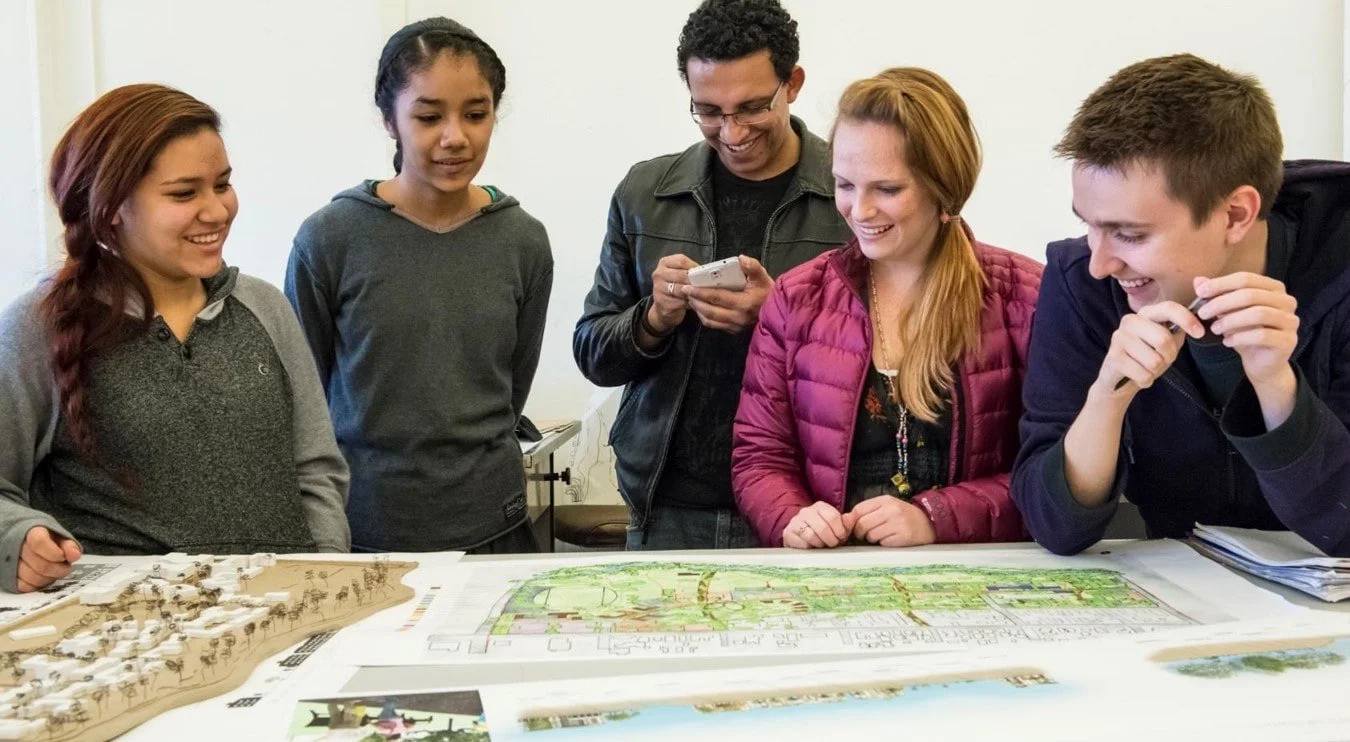
Image courtesy of Growing Up Boulder
On this episode of the Regenerative Real Estate Podcast, Mara Mintzer of Growing Up Boulder presents a different starting point. Her work shows that when children are invited into planning and design processes as legitimate participants, their input surfaces practical insights about safety, access, nature, and belonging—insights that often remain invisible in adult-only approaches to development.
What emerges is not a specialized strategy for playgrounds or youth amenities, but a broader way of thinking about cities and communities—one that begins with everyday experience and expands into places that are more welcoming, functional, and resilient for people of all ages.
From “Kid Amenities” to Civic Participation
Mara describes a common misconception: that designing for children means segregating them into specialized spaces, such as playgrounds, sports fields, and a handful of recreational uses. But throughout most of human history, children were not separated from civic life. They moved through shared spaces, learned by observing, and developed independence through everyday participation.
When that participation disappears, the impacts compound. Not only do kids lose opportunities for healthy risk and competence-building, but cities lose a critical perspective on what is working and what is failing at the street level—where safety, comfort, and accessibility are felt viscerally, not abstractly.
In Mara’s work, children’s ideas are treated not as symbolic input, but as information that can meaningfully shape decision-making. When adults create space to listen, planning processes often become more grounded in how places are actually used.
“There’s a really important book called The Anxious Generation by Jonathan Haidt. He talks about how, because we are not allowing our children to take enough risks, they are at much higher risk of anxiety—and we’re seeing much higher rates of anxiety.”
What Children Consistently Ask For
When young people are invited to imagine environments that work for them, Mara notes that clear patterns emerge. Their focus is rarely on the technical details that dominate planning discussions. Instead, they talk about how places feel and how easily they can move through them.
Across projects, children and teens consistently emphasize:
Safe ways to walk and bike, allowing greater independence
Connection to nature, including plants, animals, and native species
Places to spend time with friends, especially for teenagers
Water, including opportunities for water play
Beauty, which children often describe as missing from gray or dull environments
As Mara points out, children do not ask for parking lots. Their priorities tend to align with places that are more walkable, connected, and comfortable at a human scale.
“When children design their version of a city, which is inherently a child-friendly city, it ends up being a sustainable city. It ends up being a more humane city.”
Teenagers and the Question of Belonging
The conversation becomes especially pointed when it turns to teenagers. Mara shares how frequently teens are pushed out of public space—yelled at for using equipment, monitored for congregating, treated as “creating problems” simply by existing together.
Rather than responding with more programming, teens often ask for autonomy. In one project, Growing Up Boulder hired teen consultants and let them lead engagement with their peers. The results surprised adult planners. Teens didn’t want a calendar of activities. They wanted a setting that supported self-organized life: a place to gather, move, play, and spend time without being policed.
One example was a request for a small kiosk where equipment could be borrowed for informal games. The idea was not about adding amenities, but about enabling self-directed use of space.
The Proof in the Pudding
Growing Up Boulder began with limited funding and significant volunteer effort. Mara describes starting with small projects and allowing adults—planners, officials, and community members—to directly experience the insight young people bring.
Over time, this approach led to broader support. City departments that had not previously engaged youth began allocating funding. Youth participation expanded across Boulder’s planning efforts, eventually involving all city departments.
A key part of the process is translation. Mara explains how her team documents what they hear from children, translates it into formats usable by adult decision-makers, and then communicates outcomes back to young participants—maintaining accountability on both sides.
Designing Without Overbuilding
Mara also challenges the assumption that child-friendly design must be expensive. She shares an example of a nature play area created using trees that had already fallen or been removed due to disease. Built from existing materials, the space cost a fraction of a conventional playground and became heavily used by both children and adults.
She contrasts this with highly structured, poured-in-place playgrounds, which can limit creativity and engagement. Loose materials—logs, rocks, and sticks—support open-ended play and allow children to interact with their environment in different ways over time.
Similar principles appear in projects like climate-resilient schoolyards, where removing asphalt and improving drainage can support water play, habitat restoration, and healthier outdoor environments.
A City Friendly to Children is a City Friendly to All
While her work centers on young people, Mara emphasizes that its benefits extend more broadly. In one project, children and seniors were paired to evaluate a corridor. Both groups identified similar needs: safer movement, places to rest, better lighting, cleanliness, and a sense of care in the public realm.
The takeaway is not that children’s needs replace others’, but that listening to them often highlights shared priorities across generations. When those needs are addressed, public spaces tend to become more welcoming and functional for many people.
The larger question raised by the conversation is not only about age, but about whose voices are treated as legitimate in shaping the places we live.
“There’s a saying in our field: a city friendly to children is a city friendly to all.”