With nearly half of all U.S. farmland expected to change hands in the next two decades — and only one in four farmers holding a formal succession plan — Latitude spotlights proven strategies that keep working land in farming hands.
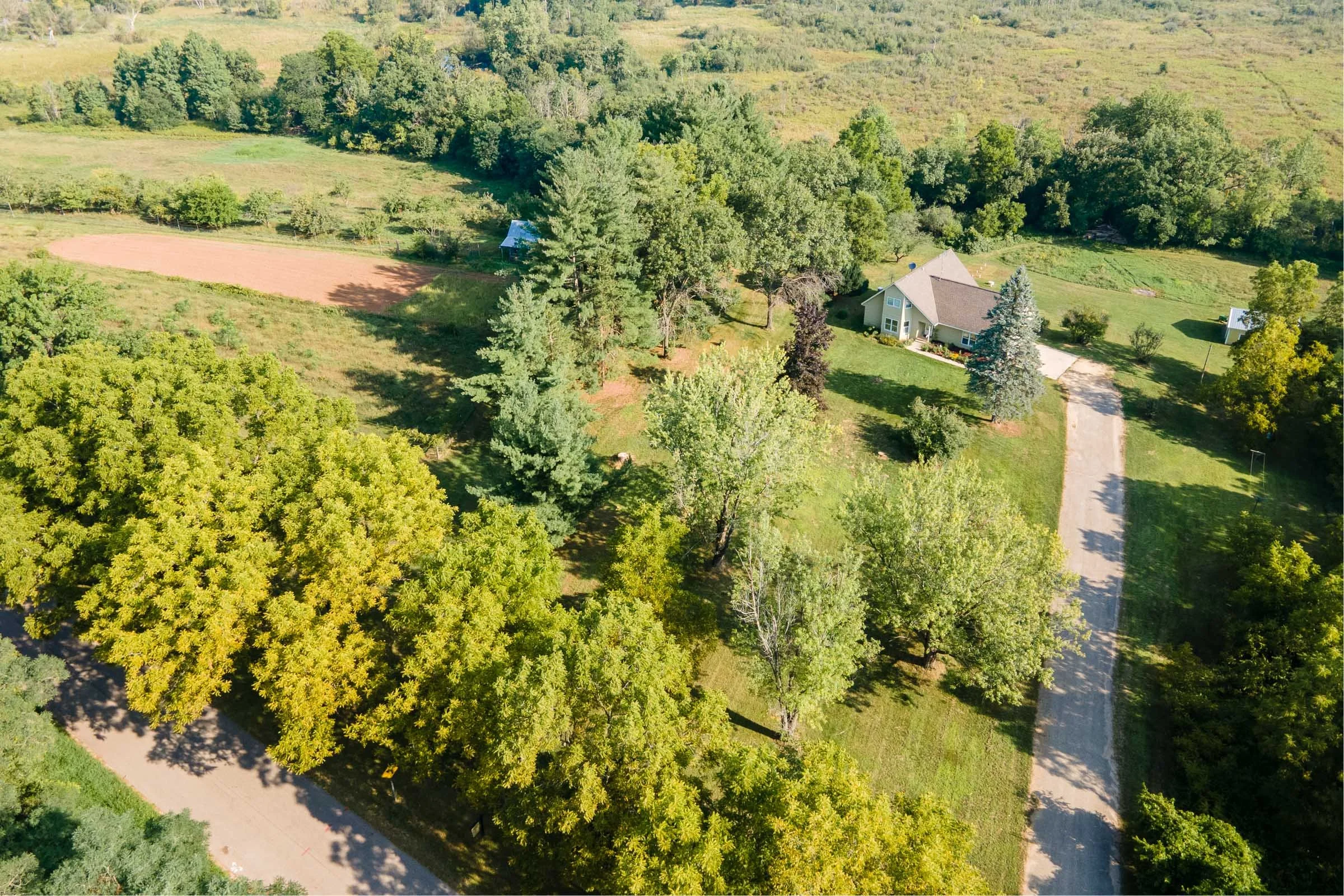
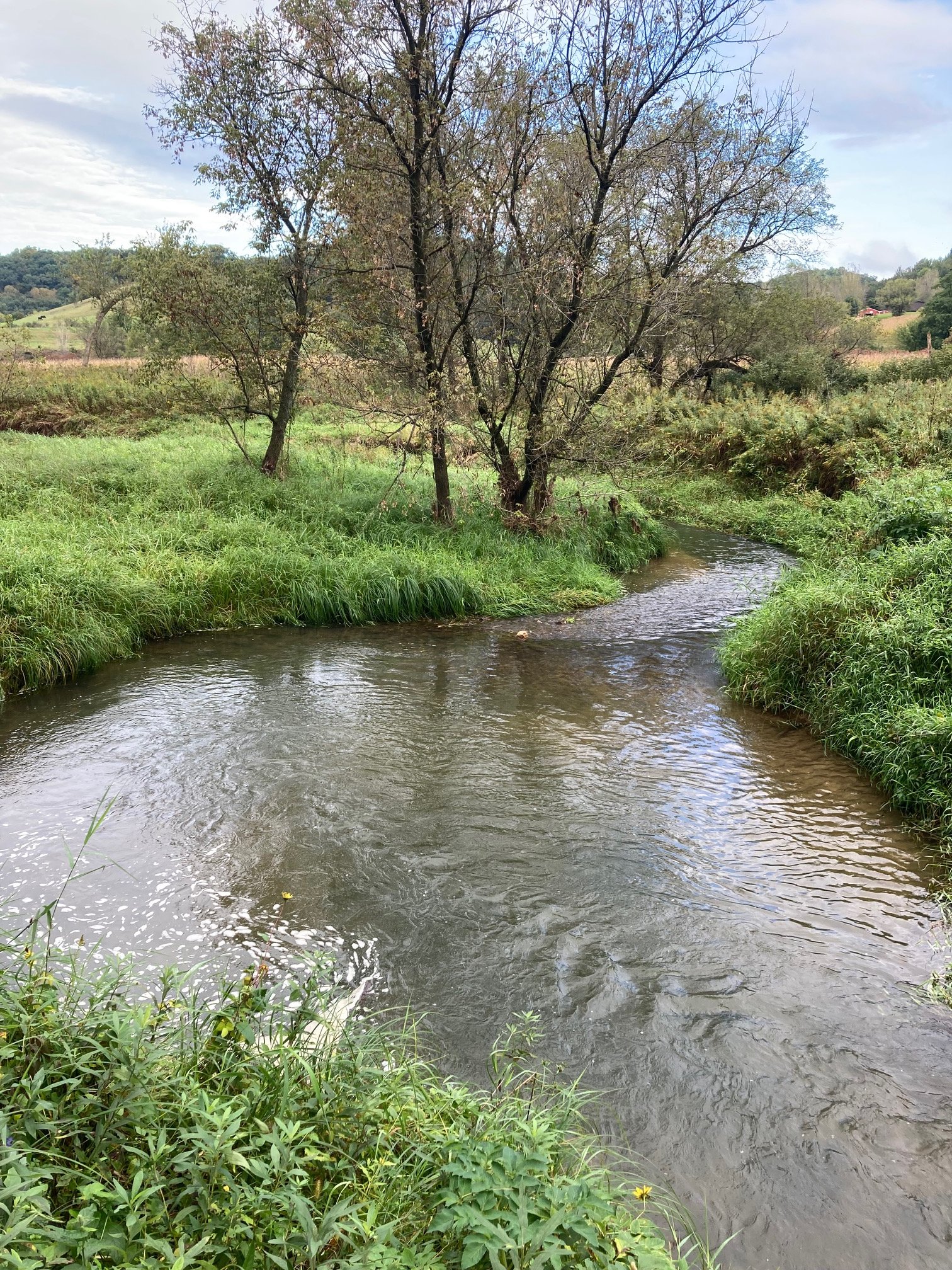
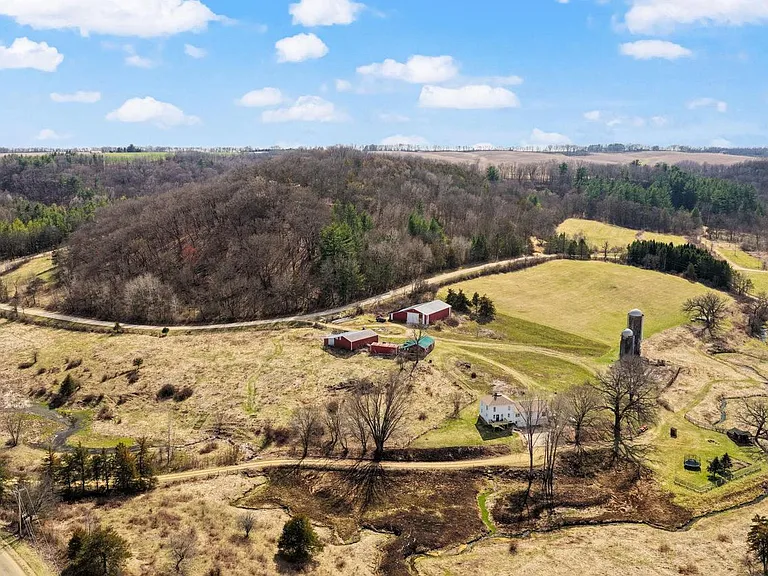
A farm Latitude’s Mark Voss helped transition in Rio, Wisconsin.
SEATTLE (April 7, 2026)— American agriculture is facing a quiet crisis. Nearly half of all U.S. farmland is expected to change hands within the next 20 years [1], yet only one in four farmers has a formal succession plan in place [2]. The result: generations of knowledge, ecological stewardship, and community identity stand at risk of being lost, not to drought or market forces, but simply to the absence of a plan. Latitude Regenerative Real Estate, the nation's premier brokerage for regenerative living, is working to change that.
At a recent farm succession symposium, Latitude's Mark Voss presented a framework built not on abrupt ownership transfers, but on deliberate, overlapping stewardship, a model already proving its value at farms across the country. His message: the future of farming depends as much on how communities organize around land as on the agronomic practices employed on it.
“The succession crisis isn’t just about who owns the land next — it’s about whether the knowledge, culture, and economic relationships built over decades survive the transition at all,” said Mark Voss, Partner, Latitude Regenerative Real Estate. “The farms that navigate this best treat succession as a process of collaboration, not a transaction.”
The Scale of the Challenge
The numbers tell a sobering story. More than 63% of U.S. farm operators are age 55 or older [3], while fewer than one in ten are under 35 [4]. Over one-third of America’s farmers are now past age 64. Despite this, 71% of retiring farmers have not identified a successor [5], and of those who intend to pass their operation to the next generation, only 20% are confident their plan will actually succeed [6].
The financial stakes compound the urgency. Average U.S. farmland values reached $4,350 per acre in 2025, a 4.3% increase from the prior year and part of a sustained upward trend [7] placing agricultural land increasingly out of reach for beginning farmers without seller-financed or community-supported transition structures.
Succession Through Overlap: Learning from the Field
At Meadowlark Organics in Wisconsin, an elder organic grain farmer invited successors onto the land while he was still actively working it. On-farm housing made it possible for multiple people to live and collaborate there for nearly eight years — long enough for knowledge to transfer through daily experience: planting cycles, harvest, marketing decisions, equipment repair, and the kind of conversations that only happen around a kitchen table.
Seller financing provided income continuity for the elder farmer while ownership gradually transferred to the next generation. During the overlap period, the farm expanded into milling and direct marketing, deepening both its economic resilience and its identity as a regional institution.
Winter Green Farm in Oregon followed a similar path. Succession planning began well before any formal ownership change, and today multiple legal entities collaborate within a biodynamic farm organism encompassing vegetable production, livestock, and value-added enterprises. Shared infrastructure and several homes on the land support daily collaboration across generations, distributing both responsibility and the institutional knowledge that makes a farm viable.
Community-Based Stewardship: The Zinniker Farm Model
Voss also highlighted the work of Mark and Petra Zinniker and Robert Karp, whose Zinniker Farm Stewardship Association offers a community-based succession model designed to ensure land remains in active, purposeful stewardship beyond any individual owner’s tenure. This approach reflects a broader pattern Voss calls “North Star Village-ing” — the deliberate organization of people and resources around working land in ways that sustain both agricultural productivity and community vitality over the long term.
These models are central to Latitude Regenerative Real Estate’s mission. Unlike conventional real estate transactions, Latitude’s approach prioritizes the preservation of agricultural knowledge, ecological health, and community relationships at every stage of a land transition.
Five Steps Farmers Can Take Now
For farmers beginning to think about succession, Latitude Regenerative Real Estate recommends the following starting points:
Start the conversation early — ideally 10 or more years before you plan to step back. Succession planning done under time pressure rarely produces the best outcomes. The farms that succeed are the ones where both generations had years to learn together.
Explore seller financing as an alternative to outright sale. Seller-financed transitions allow elder farmers to receive ongoing income while making land accessible to the next generation at a manageable pace — without the farm passing to outside investors.
Consider on-farm housing as infrastructure, not a luxury. Farms that have successfully transitioned across generations often share one feature: the ability for multiple families or individuals to live and work on the land together. Housing enables the overlap that makes knowledge transfer real.
Explore legal structures that reflect your values. Land trusts, stewardship associations, multi-entity farm organisms, and conservation easements can all be tools for ensuring your farm remains a working agricultural operation in perpetuity — regardless of who holds title.
Assemble the right team. Effective farm succession involves more than a real estate attorney and a will. Seek out professionals with specific experience in agricultural transitions, including farm succession specialists, agricultural lenders familiar with seller financing, and advisors who understand both the legal and the human dimensions of passing a farm forward.
Farm succession is one of the most consequential and underreported stories in American agriculture today. With millions of acres in transition, communities across the country are navigating questions about who will farm the land, how knowledge will be preserved, and whether rural economies will strengthen or fragment in the decade ahead.
Latitude Regenerative Real Estate is available to consult with farming families at any stage of the succession conversation. Contact team@chooselatitude.com.or visit www.chooselatitude.com to learn more.
MEDIA CONTACT:
Stacia Kirby
Principal, Kirby Communications Inc.
206-478-5841
stacia@kirbycomm.com
Sources
[1] AgAmerica Lending. “Farm Succession Planning Tips.” AgAmerica.com, November 2025. agamerica.com/blog/financing-for-farm-succession-planning/
[2] AgAmerica Lending. “Farm Succession Planning Tips.” AgAmerica.com, November 2025. Only one in four farmers surveyed reported having a formal farm succession plan in place.
[3] The World Data. “American Farmers Statistics 2025.” TheWorldData.com, December 2025. 63.2% of U.S. farm producers are age 55 or older. theworlddata.com/american-farmers-statistics/
[4] AgAmerica Lending. “Farm Succession Planning Tips.” AgAmerica.com, November 2025. Fewer than one in ten U.S. farm producers are under the age of 35, per the 2022 Census of Agriculture.
[5] Iowa State University study, cited in: Michigan State University Extension. “Farm Transition and Succession – Why Bother?” canr.msu.edu. 71% of retiring farmers had not identified a successor.
[6] Farm Journal survey, cited in: Michigan State University Extension. “Farm Transition and Succession – Why Bother?” canr.msu.edu. 80% of farmers plan to pass the farm to the next generation; only 20% were confident their plan would succeed.
[7] The World Data. “American Farmers Statistics 2025.” TheWorldData.com, December 2025. Average U.S. farm real estate value rose to $4,350/acre in 2025, a 4.3% year-over-year increase.